Land Managed for Better Wildlife Access
Hunting Property Improvement in Lansing for recreational land needing enhanced access and wildlife movement
Hunting properties throughout Lansing often suffer from dense understory growth that limits visibility, restricts wildlife movement, and makes access to prime observation areas difficult even for experienced landowners. Strategic vegetation management opens acreage for improved sightlines, creates defined travel corridors that funnel deer and other game, and prepares ground for food plot establishment that attracts wildlife during hunting seasons. Mitten State Mulching Co develops customized solutions based on property layout, existing habitat features, and the landowner's objectives for both recreational use and wildlife management.
Improvement work focuses on clearing access routes to elevated stands or ground blinds, removing invasive species that crowd out native browse, and opening edges where fields meet wooded areas to create natural transition zones that wildlife prefer. The process avoids wholesale clearing that eliminates cover, instead targeting specific areas that enhance the property's functionality without disrupting bedding areas or existing game patterns.
Discuss seasonal property improvement goals during a planning session to align clearing work with hunting timelines.
What Changes After Vegetation Management Completes
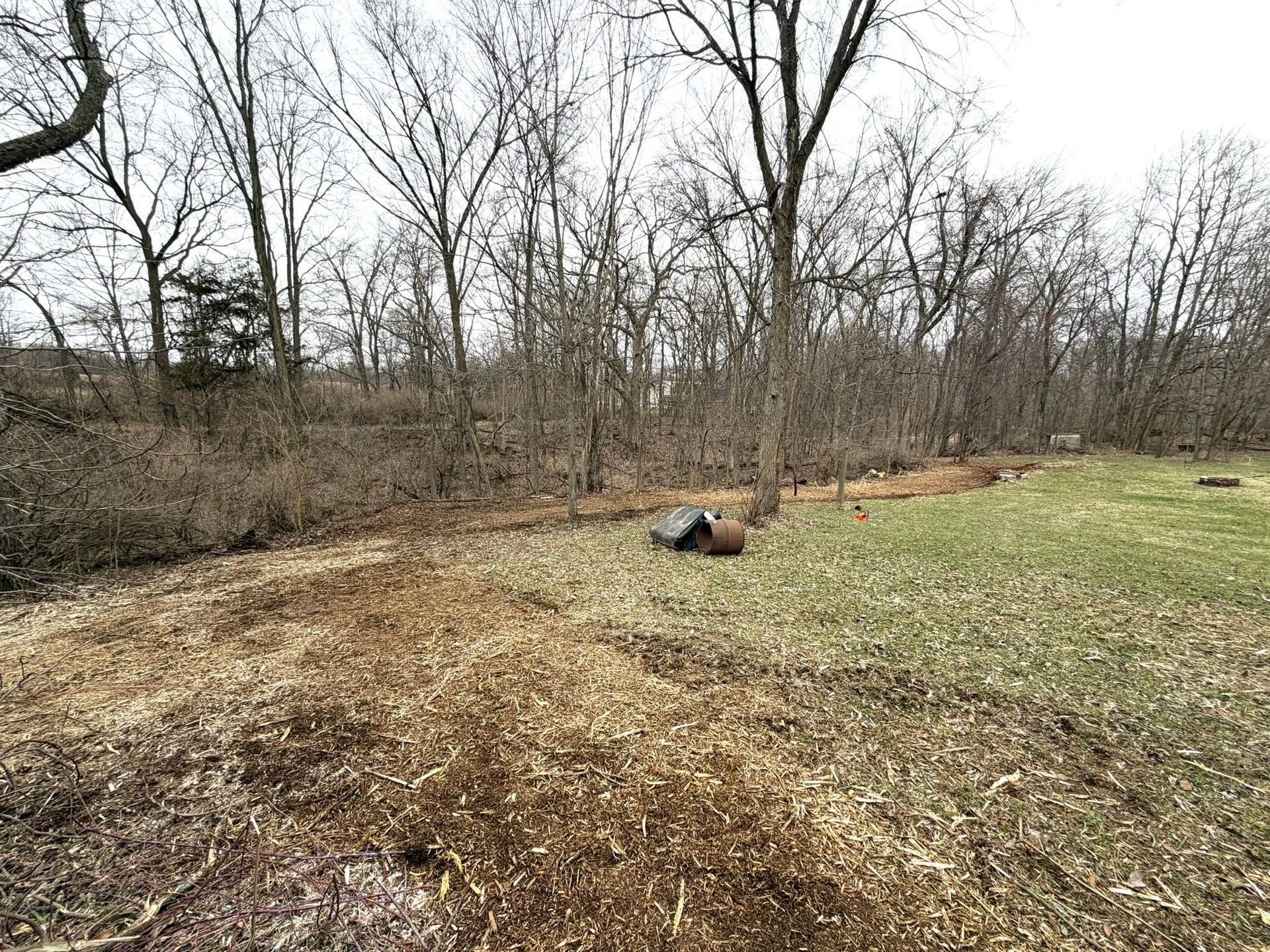
Clearing work for hunting properties involves selective removal rather than total vegetation elimination, preserving cover and mast-producing trees while opening understory areas that allow movement and observation. Equipment processes thick brush into mulch that settles into the ground, reducing noise when walking through cleared zones and providing a stable surface for vehicles or foot traffic without creating muddy ruts that develop in repeatedly used paths.
Once the work completes, landowners notice clearer shooting lanes from established stand locations, easier access to remote sections of the property that were previously difficult to reach during early-morning approaches, and ground prepared for seeding food plots without requiring extensive tilling or debris removal. Wildlife begins using the newly opened corridors within weeks as natural travel patterns adjust to the improved habitat structure.
Improvement projects can address entry points, internal access routes, food plot preparation, or edge habitat enhancement depending on the property's current condition and the landowner's priorities. Work is often scheduled during off-season months to avoid disturbing game during critical periods and to allow vegetation to settle before hunting activity resumes.
Answers to Frequent Service Questions
Land managers considering habitat improvements often ask about timing, approach, and how the work affects existing wildlife patterns on their properties.
How does clearing affect deer movement and bedding areas?
Selective vegetation removal opens travel corridors and sightlines while preserving thick cover in bedding zones, encouraging wildlife to use the property more predictably without eliminating the security cover they require.
When should hunting property improvements be scheduled in Lansing?
Late winter through early spring allows work to complete before nesting season and gives vegetation time to respond before fall, though summer projects can target invasive species when they are actively growing and easier to identify.
What equipment is used for habitat management work?
Forestry mulching equipment processes brush and saplings into organic material that decomposes on-site, avoiding the noise and soil disturbance associated with bulldozers or excavators that can compact ground and destroy valuable topsoil layers.
Can food plot areas be prepared as part of the clearing process?
Mulching removes competing vegetation and creates a seedbed surface, though additional soil testing and amendments are typically needed to establish productive plots that attract and hold game throughout the season.
How much clearing is too much for a hunting property?
The goal is to enhance rather than eliminate cover, so work focuses on opening 20 to 30 percent of dense areas to improve movement and visibility while maintaining the habitat structure that keeps wildlife on the property instead of pushing them toward neighboring land.
Mitten State Mulching Co works with hunters and land managers to balance access improvements with habitat preservation, creating properties that support both wildlife and recreational use. Schedule an assessment to identify the most effective approach for your acreage and objectives.