Fence Lines and Field Edges Fully Accessible
Brush and Overgrowth Removal in Lansing for neglected property sections limiting maintenance and visibility
Unmanaged growth along fence lines, field edges, and wooded transitions creates barriers that conventional mowing cannot address and that worsen each growing season as roots spread and stems thicken. Brush and overgrowth removal restores access to these areas, eliminates invasive species that crowd out desirable vegetation, and reclaims sections of residential, agricultural, and recreational properties that have become unusable. Mitten State Mulching Co handles removal work across Lansing on small residential parcels and large-acreage properties where thick vegetation has overtaken boundaries and created maintenance challenges.
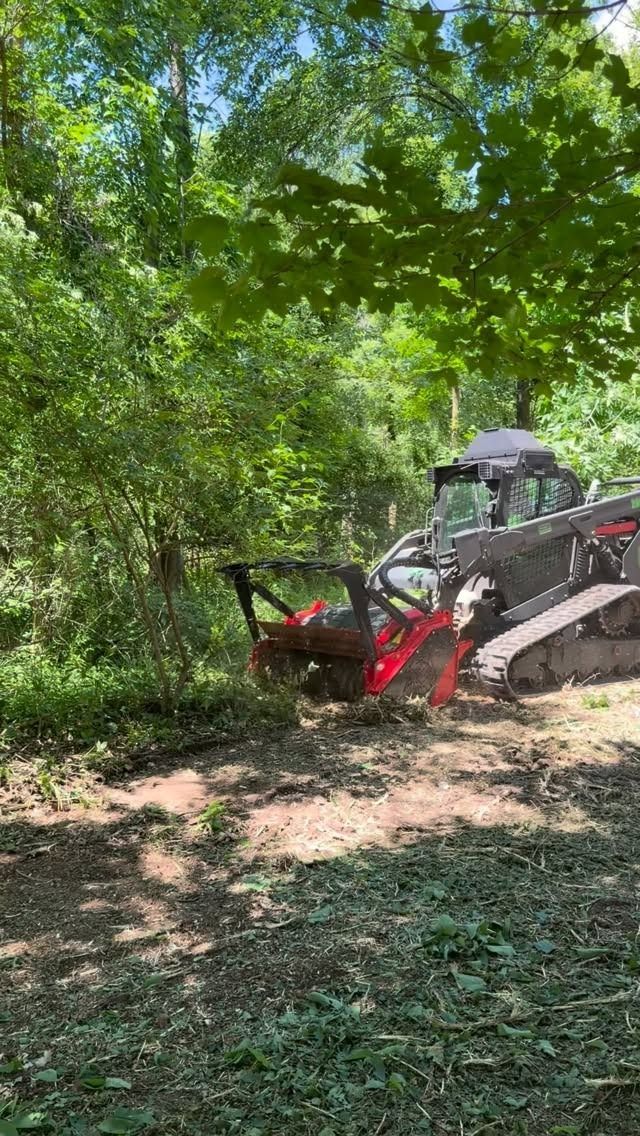
The removal process targets growth that standard equipment cannot cut, including woody stems, multi-flora rose, autumn olive, and other invasive species common throughout Michigan that regenerate aggressively if not processed completely. Mulching equipment grinds material into chips that settle into the soil rather than requiring collection and hauling, reducing project timelines and eliminating the need for burn permits or disposal fees.
Schedule an assessment to identify the most effective clearing solution based on vegetation type and property conditions.
What Proper Brush Removal Requires
Effective removal depends on processing vegetation at ground level to prevent rapid regrowth from established root systems that survive surface cutting. Equipment must grind stems and root crowns into material fine enough to decompose quickly, disrupting the plant's ability to resprout while creating a mulch layer that suppresses seed germination from invasive species waiting in the soil.
After removal, property owners notice clear fence lines that allow for repair or replacement work, field edges that can be maintained with standard mowing equipment, and transitions between wooded and open areas that no longer encroach several feet each year. The ground becomes accessible for walking, vehicles, or additional land improvements without navigating tangled growth or hidden obstacles that create safety hazards and limit usability.
Removal projects often reveal property features hidden for years, including old fence posts, drainage structures, or grade changes that affect water movement during heavy rain events common in mid-Michigan. Targeting specific problem areas allows property owners to address high-priority zones without committing to full-property clearing, with the option to expand work as needed based on results and budget.
What Property Owners Usually Ask
Questions about brush removal typically focus on methods, regrowth prevention, and how the work integrates with ongoing property maintenance throughout Lansing.
What types of vegetation qualify as brush and overgrowth?
The category includes woody shrubs, saplings, invasive species like buckthorn and honeysuckle, and any growth that exceeds the cutting capacity of standard mowers or trimmers and regenerates from established root systems.
How quickly does vegetation regrow after removal?
Processing material at ground level and leaving a mulch layer significantly slows regrowth, though invasive species with deep root reserves may require follow-up treatment or maintenance to prevent reestablishment over the following growing season.
Can removal work be done near existing structures or landscaping?
Equipment can operate in confined areas and around obstacles, though access width and proximity to fragile features affect the approach and may require hand-clearing in sections where machines cannot fit safely.
What happens to the mulch material left on-site after removal in Lansing?
The organic material breaks down naturally, adding nutrients to the soil and forming a barrier that reduces erosion on slopes or areas with exposed soil from years of dense vegetation cover.
How does removal affect property drainage and water flow?
Clearing thick vegetation often improves surface water movement by eliminating dense root mats and organic buildup that trap moisture and create saturated zones, especially along field edges and low-lying areas prone to standing water.
Mitten State Mulching Co evaluates vegetation density, terrain, and property access before determining the removal approach that delivers long-term results. Contact us to review your property's specific overgrowth challenges and timeline requirements.